
The Types of Concrete: Considering the Most Significant Features
A short guide to concrete types, specifics, and scope of use
Concrete remains the most universal type of construction material. It is used widely in hi-rise construction, commercial buildings, ready-made manufacture and even in DIY practices. Yet, concrete is a common name uniting a huge diversity of compounds which have various purposes and features Let’s get deeper into the types of concrete to ease the choice of concrete for the customers of Fondau.
- Concrete Certification in the US and Europe
In different regions around the globe, various standards are applied for concrete certification. For example, in Europe, the requirements for concrete are regulated by the standard EN 206-1, approved by CEN in 2000. The document is applied in EU countries with different climatic conditions and construction experience.
In the US, concrete products should be certified by ACI (American Concrete Institute) which attributes design codes and construction specifications.
- Which Concrete Types to Choose
In the US market, various types of concrete are represented with a diversity of parameters to consider including as following:
- The strength of concrete
- Frost resistance
- Resistance to heat and radiation
- Durability
- Workability
According to these features, the following types of concrete compounds can be chosen.
- Normal strength concrete has a 1:2:4 ratio of aggregate, concrete and sand and it’s the most all-purpose formula for pavements, ready-made concrete details and blocks.
- Reinforced concrete has wiring inside with the help of steel rods and cables. It’s denser than previous and it fits impeccably for heavy-weight loads.
- Ordinary concrete is also made under the formula of 1:2:4 but with different proportions. It suits building goals without huge tensile strength or regular vibration load.
- Prestressed concrete is made using special techniques with rods, bars, or tendons prestressed before application. As a result, prestressed concrete acquires improved resistance which makes it suitable for heavy-load constructions like bridges, roofing, hi-rise wall panels etc.
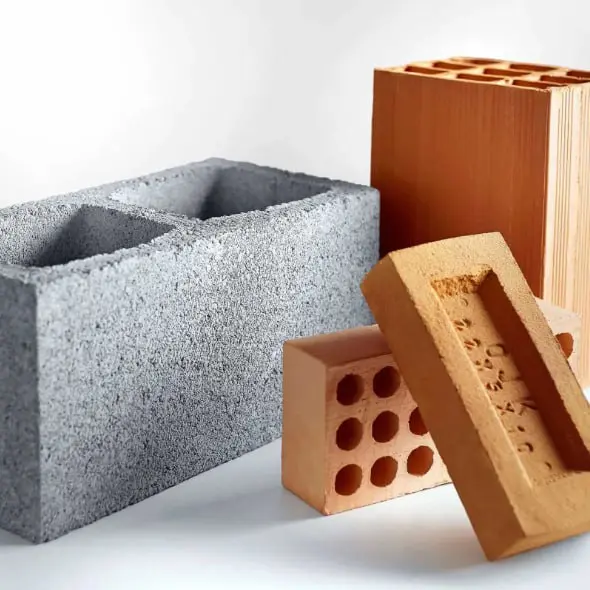
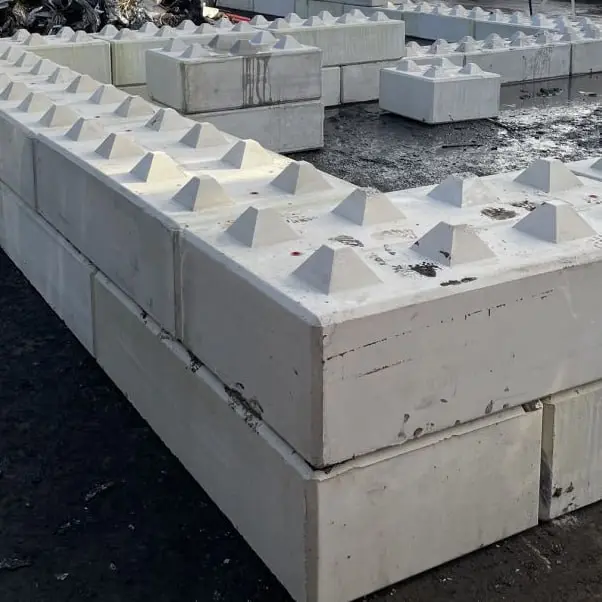
- Precast concrete items are regular in modern buildings. These are not liquid concrete structures but formed blocks which are used for standard building models and plans.
- Lightweight concrete says for itself. Its formula provides a density of no more than 393 lb/ft2 which suits lightweight constructions and provides extremely low thermal conductivity.
- High-density concrete is also known as specifically atomic plant material due to the addition of barytes which provide the highest radiation resistance. Of course, these are not the ultimate types of concrete. Yet, we hope that with this guide, you can formulate your request easily and find the best concrete-selling offer on Fondau.
The Types of Concrete: Considering the Most Significant Features
Previously viewed

Contact us
We help thousands of builders and buyers solve their problems every month
'%3e%3cpath%20d='M7.04548%2023.2561V11.2787L3.33093%207.88042L0%205.99463V21.1424C0%2022.3119%200.947559%2023.2561%202.11369%2023.2561H7.04548Z'%20fill='%234285F4'/%3e%3cpath%20d='M23.9551%2023.2559H28.8869C30.0565%2023.2559%2031.0006%2022.3083%2031.0006%2021.1422V5.99463L27.2278%208.15458L23.9551%2011.2786V23.2559Z'%20fill='%2334A853'/%3e%3cpath%20d='M7.04646%2011.2787L6.54102%206.59877L7.04646%202.11963L15.501%208.46058L23.9555%202.11963L24.5209%206.35694L23.9555%2011.2787L15.501%2017.6196L7.04646%2011.2787Z'%20fill='%23EA4335'/%3e%3cpath%20d='M23.9551%202.11959V11.2786L31.0006%205.99459V3.17637C31.0006%200.562564%2028.0168%20-0.927495%2025.9279%200.640064L23.9551%202.11959Z'%20fill='%23FBBC04'/%3e%3cpath%20d='M0%205.99464L3.24035%208.42499L7.04548%2011.2787V2.11964L5.07262%200.64012C2.98012%20-0.92756%200%200.56262%200%203.17631V5.99464Z'%20fill='%23C5221F'/%3e%3c/g%3e%3cdefs%3e%3cclipPath%20id='clip0_1911_12172'%3e%3crect%20width='31'%20height='23.3711'%20fill='white'/%3e%3c/clipPath%3e%3c/defs%3e%3c/svg%3e)


